Reserve Your Windrose →
Windrose Electric
✦ Strong Launch

Windrose Power

Containerized Energy Storage Charging Station

20ft
Container
2 MWh
LFP Battery
2 MW
Output Power
CCS + MCS
Charging Config
250kW×6
CCS Guns
3.5MW
Peak DC Power

How It Works

From Wind to Wheels

Wind Farm
Direct renewable
energy source
⚡ Charges
WINDROSE POWER 2 MWh
Windrose Power Pod
2 MWh mobile battery
drives to any site
Drives to site
WINDROSE WINDROSE GENERIC FLEET
Charging Site
Charges Windrose trucks &
any CCS/MCS fleet

In the News

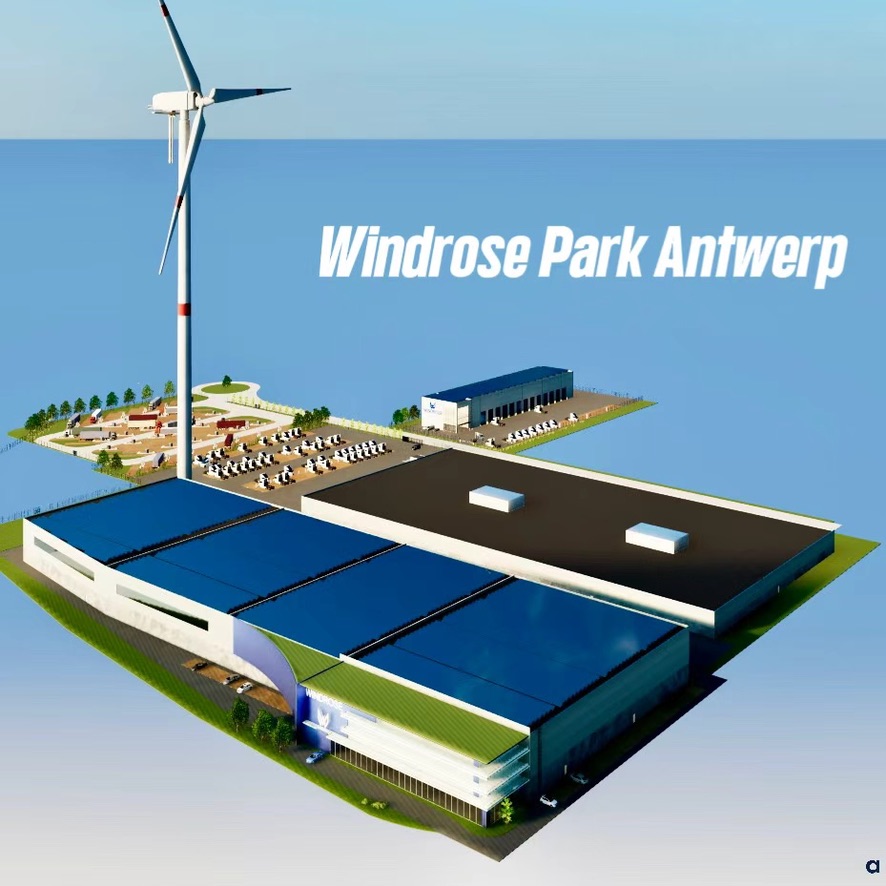
Windrose Park Antwerp — wind-powered assembly facility at the Port of Antwerp
🇧🇪 Press Release · Vleemo
Windrose Park Antwerp Runs on 100% Wind Power
Vleemo provides Windrose direct access to wind energy from existing Port of Antwerp turbines — powering both truck assembly and the adjacent charging infrastructure entirely from wind.
Read the press release ↗

Overview

Mobile Energy Storage Charging Station

Windrose Power is a self-contained 2 MWh mobile energy storage and charging station. 2 MW of charging power via MCS + CCS, liquid cooling, and IP54/IP65 protection. OEM/ODM customization available.

🛡️
Overall IP54 / Battery IP65
Protection Rating
❄️
−20 to +60 °C
Liquid Cooling
🔧
OEM / ODM
Supports Customization

Battery Chemistry

LFP vs NCA: Why Chemistry Matters

Windrose Power uses LFP (Lithium Iron Phosphate) — the safest, longest-lived lithium-ion chemistry. Here's how it compares to NCA (Nickel Cobalt Aluminum), used in many stationary storage systems.

Windrose Power · Battery Chemistry

LFP

Lithium Iron Phosphate

>8,000
Cycles
20+ yr
Service life
−40°C
Min. temp
No thermal runaway Stable chemistry Outdoor safe

NCA · Battery Chemistry

NCA

Nickel Cobalt Aluminum

~3,000
Cycles
~8 yr
Service life
High
Energy density
Active cooling req. Stationary use

Inside the Battery — LFP vs NCA

Cell Cross-Section — Cathode (+) Top · Anode (−) Bottom

LFP — Windrose Power
NCA — Other ESS
Li⁺ is the carrier ion — moves between cathode and anode through the electrolyte Anode (graphite) is identical in both LFP and NCA chemistries Cathode material determines safety, lifetime, and thermal stability

Cathode Crystal Structure — Where the Elements Live

LFP — Olivine Structure

LiFePO₄

Li Fe P O

Li sits in channels between FePO₄ layers. O is locked inside PO₄ tetrahedra — cannot escape, even above 270 °C.

NCA — Layered Oxide

LiNi₀.₈Co₀.₁₅Al₀.₀₅O₂

Li Ni Co Al O

Li alternates with Ni/Co/Al-O layers. O is held by weaker ionic bonds — releases above ~150 °C, igniting the electrolyte.

Battery Lifetime: LFP vs NCA

LFP (Windrose)
>8,000 cycles — 20+ year service life
NCA
~3,000 cycles — ~8 year service life

At one full charge/discharge cycle per day, LFP reaches 8,000+ cycles in over 20 years with minimal capacity fade. NCA chemistry degrades faster under heavy daily cycling, typically reaching end-of-life around 8 years. LFP also carries no thermal runaway risk — a critical safety advantage for mobile, outdoor deployment.
Specification Sheet

Full Technical Specifications

Category Item Parameters
Battery Capacity 2 MWh
Cell Type LFP, >8,000 cycles
DC Output Voltage Range 200–1500 Vdc
Charging Power 2 MW — MCS + CCS MCS optional
Connectors MCS + CCS1 / CCS2 MCS optional
Communication OCPP 1.6J
Voltage Range 200–1500 Vdc
AC Output Rated Power 500 kW
Output Socket 400A × 1  ·  200A × 1  ·  125A × 1 380V industrial socket
AC Input Input Socket 500 kW (Industrial Socket)
DC Input Rated Current 400 A
Replenishment CCS1, CCS2 Charging dock optional
PV Input MPPT 500 kW  ·  DC 300–1000 V Optional
Others Thermal Management Liquid cooling
Communication Protocol OCPP 1.6J, Modbus-TCP / IEC61850 / 104
Temperature Range −40 to +55 °C
HMI 10-inch  ·  32-inch
Protection Degree ≥ IP54
Corrosion Protection C4 C5 optional
Size & Weight Dimensions (L × W × H) 6058 × 2438 × 2896 mm
Weight 25 T

Not sure if it fits your needs?

Contact us — we'll customize Windrose Power solutions for your specific scenarios.

Contact Windrose →